Photography and archival custody 1868–1871 / 1981
John Thomson’s Hong Kong photographs
John Thomson travelled through China between 1868 and 1872, photographing streets, landscapes and people for audiences who would usually encounter them in print. Working with wet-collodion glass negatives meant carrying fragile equipment and preparing plates near the place of exposure. The tea-house view comes from Hong Kong during those journeys. Its later history is almost another journey: the negatives entered Henry Wellcome’s collection in 1921, and a contact print was made in 1981. The scene, the glass negative and the later sheet of photographic paper each have their own date.
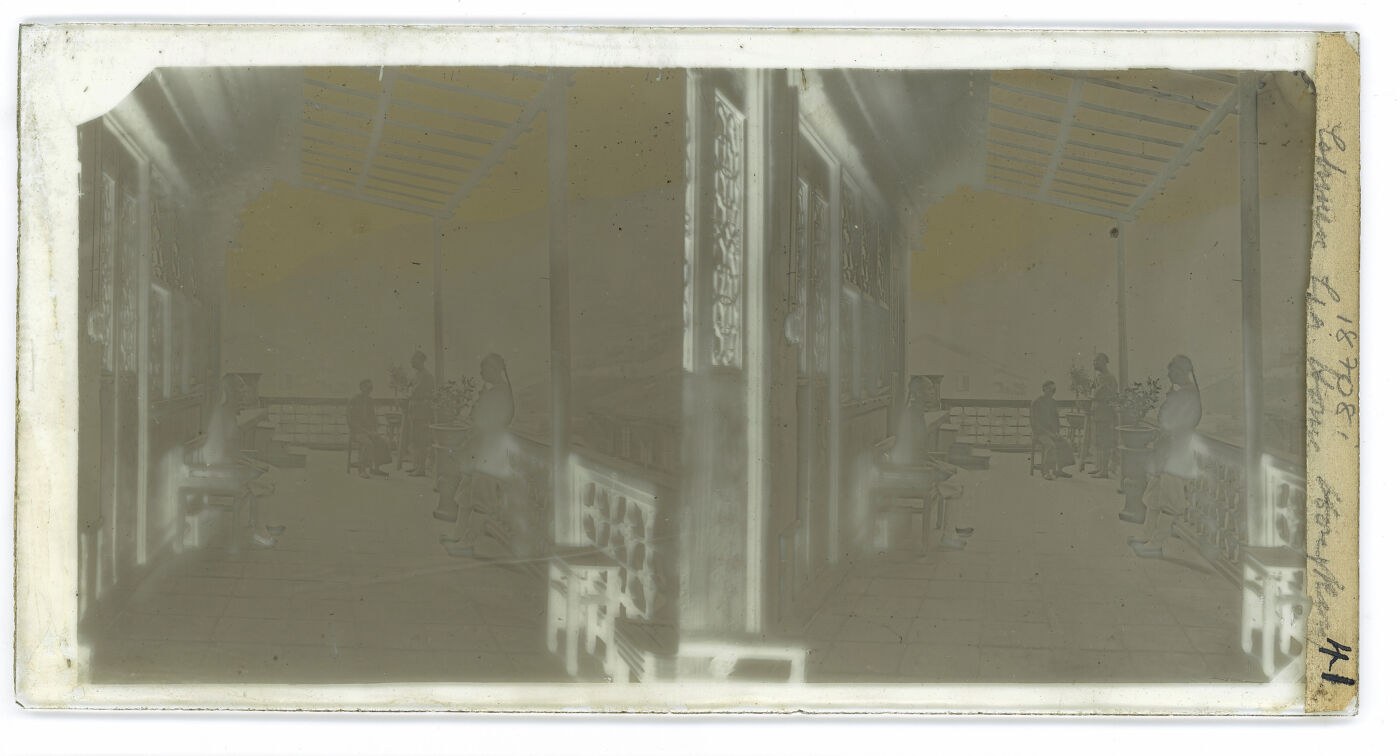
A closer look: Artifact: inspect the image
A tea house was part of the everyday social and commercial life of a busy port. Thomson’s photograph preserves details of a particular place, but its framing also reflects his choices as a visiting photographer. His glass negative was a working object from which later positive images could be made.
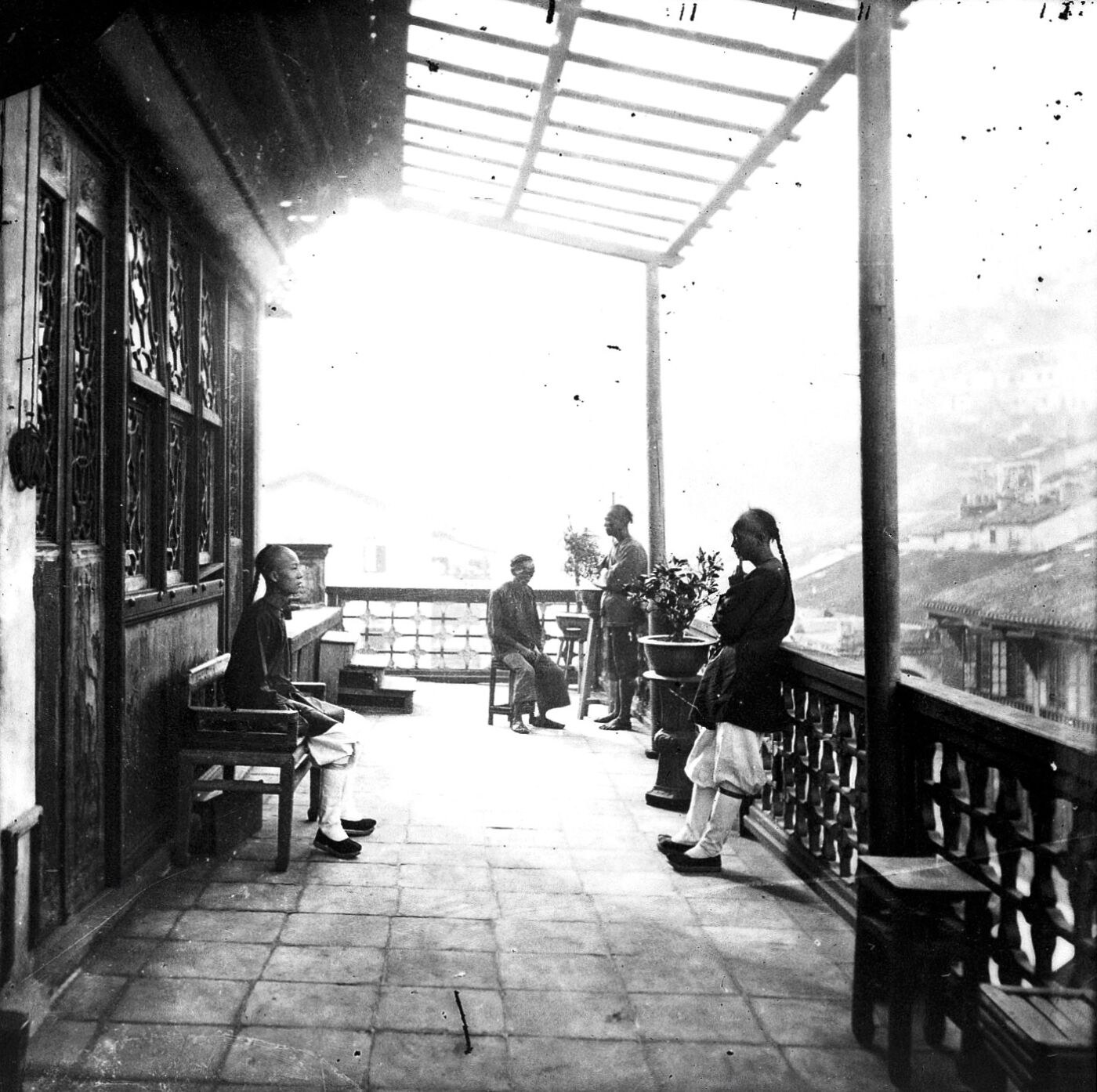
A closer look: Artifact: the later positive print
This contact print was made in 1981 from a much older negative. Printing allowed Thomson’s view to circulate again without a second visit to the tea house. It also shows why the history of a photograph includes darkroom work and later collecting, as well as the moment before the camera.
The history behind it
The documented reconstruction
The dates can coexist because they describe different stages: a Hong Kong exposure and glass negative assigned 1868–1871, followed by a contact print made in 1981. The shared negative-number reference and subject description connect the artifacts more firmly than visual resemblance alone. Their physical formats and tonal appearance also differ: the glass negative contains adjacent views, while the supplied later print presents a positive view of the verandah. Neither implies that the scene was newly photographed in 1981 or that the men were then alive. Acquisition in 1921 and a publication reference in 2009 are further events in custody and reception, rather than substitute exposure dates.
Reading the source
A catalog can attach valid dates to more than one physical stage of an image. Here a historical wet-collodion negative, its later acquisition and a twentieth-century contact print belong to a connected history. The shared negative-number reference is useful evidence for that connection. The later print date should not be made to overwrite the earlier camera exposure.
Questions for further research
The distinction also changes what can be inferred about people and places. A print made in 1981 can preserve a nineteenth-century veranda without proving that the building or its subjects remained unchanged until then. Collection and publication cities likewise do not relocate the original scene. Each date and place should stay attached to the documentary act it actually describes.
A few things to read next
Books for a longer visit, and a few good places to start online. These are ordinary links, with no affiliate commission.
On the bookshelf
Illustrations of China and Its People
Thomson’s published photographs and commentary: read his text critically alongside the pictures.
John Thomson, Life and Photographs
Places the China photographs within the photographer’s wider working life.
Siam & China Through the Lens of John Thomson
A modern selection that follows Thomson’s photography across Siam and China.
Read online
John Thomson (photographer)
A starting point for names, dates and related subjects. Follow its references when you want to go further.
Hong Kong tea house: glass negative
The original photographic object and its collecting history.
Hong Kong tea house: contact print
The separate record of the print made in 1981.
Where the pictures come from
The original records and their individual rights statements are below. The pictures have not been generated or altered for the game.
Chinese tea-house, Hong Kong. Photograph by John Thomson, 1868/1871.
Wellcome Collection · Original negative assigned 1868–1871
Public Domain Mark — free of known copyright restrictions.
Chinese tea-house, Hong Kong. Photograph, 1981, from a negative by John Thomson, 1868/1871.
Wellcome Collection. John Thomson, Chinese tea-house, Hong Kong, negative 1868–1871; contact print 1981. CC BY 4.0. Image proportionally resized and JPEG-compressed. · Contact print: 1981; original negative: 1868–1871
Wellcome Collection — Creative Commons Attribution 4.0 International (CC BY 4.0); commercial reuse permitted with attribution.
An original editorial digest of the cited catalog facts; not a second historic eyewitness document.
Wellcome Collection · Editorial digest reviewed 2026-11-01
Original Data Barnacle wording summarizing factual catalog data; underlying artifact rights are stated on the image.
History notes and reading lists prepared for Data Barnacle with AI assistance. The source institutions and authors are not sponsors or endorsers. Suggest a correction or another source