Communications history 1840s / 1900
Remembering Morse’s 1844 demonstration
On 24 May 1844, Samuel Morse sent a message from Washington to Alfred Vail in Baltimore over an experimental telegraph line. Annie Ellsworth had suggested the biblical phrase “What hath God wrought?” The event became an enduring scene in accounts of American invention. This illustration appeared much later, in Elbridge S. Brooks’s 1900 history of the nineteenth century. By then, telegraph networks had become everyday infrastructure. The picture shows how an earlier technical demonstration was remembered and staged for readers looking back over a century of change.
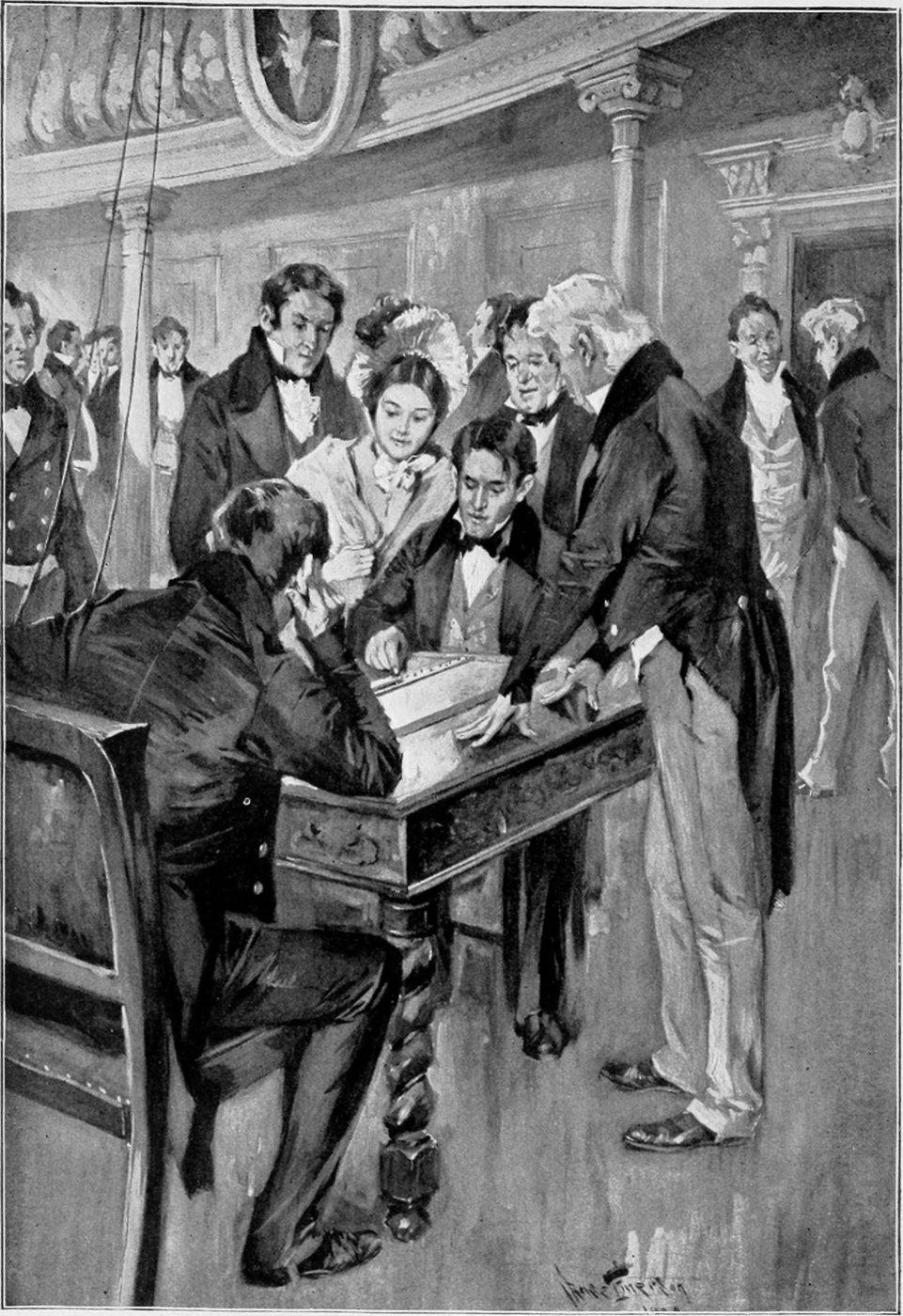
About the picture
Brooks’s illustration gathers the people and equipment into a scene readers could recognise as a historic beginning. It was made long after the 1844 event. The surviving message tape offers a different kind of evidence: a material trace of the transmission, rather than a later artist’s reconstruction of the room.
The history behind it
What the source establishes
The persuasive detail of a picture does not turn it into an eyewitness photograph. The book’s 1900 publication and its captioned 1844 event are compatible once their roles are separated. The same applies to geography: the publisher’s Boston address does not relocate the caption’s Washington demonstration. The image records a later representation of a famous communication episode, while an original telegram slip, contemporary witness account or other record would answer different evidential questions. The caption’s phrase first telegram should remain attributed to this book, rather than expanded into an unsupported worldwide priority claim.
Dates, places and close alternatives
The source is a 1900 illustration of a captioned 1844 event; neither date should replace the other. Washington belongs to the demonstration caption, while Boston belongs to the publisher. This is retrospective representation, useful for how the event was remembered but not sufficient to authenticate exact staging.
Attribute the claim before judging its reach
A source’s confident wording is evidence that its author made a claim. It is not automatically evidence that the claim has been tested against every relevant earlier record. Preserve the caption’s wording as an attributed description, distinguish the event from the publication that remembers it, and identify what kind of artifact is actually supplied. A retrospective illustration, an eyewitness testimony and an original message slip can answer different questions.
A few things to read next
Books for a longer visit, and a few good places to start online. These are ordinary links, with no affiliate commission.
On the bookshelf
The Story of the Nineteenth Century of the Christian Era
Read the 1900 history that gave this retrospective illustration its setting.
The Victorian Internet
Connects the demonstration with the wider social world created by the telegraph.
A Thread Across the Ocean
Follow the later effort to extend electrical communication across the Atlantic.
Read online
Samuel Morse
A starting point for names, dates and related subjects. Follow its references when you want to go further.
First telegraphic message—24 May 1844
The original message tape and the route between Washington and Baltimore.
What Hath God Wrought Telegraph Message
The museum explains the demonstration and a related telegraph record.
Where the pictures come from
The original records and their individual rights statements are below. The pictures have not been generated or altered for the game.
A 1900 book illustration of the Washington telegraph demonstration of 24 May 1844.
The Story of the Nineteenth Century of the Christian Era (1900); Library of Congress copy / Internet Archive Book Images / Wikimedia Commons · Illustration published 1900; scene caption refers to 24 May 1844
Public domain in the United States (1900 publication); the source image is marked no known copyright restrictions.
History notes and reading lists prepared for Data Barnacle with AI assistance. The source institutions and authors are not sponsors or endorsers. Suggest a correction or another source